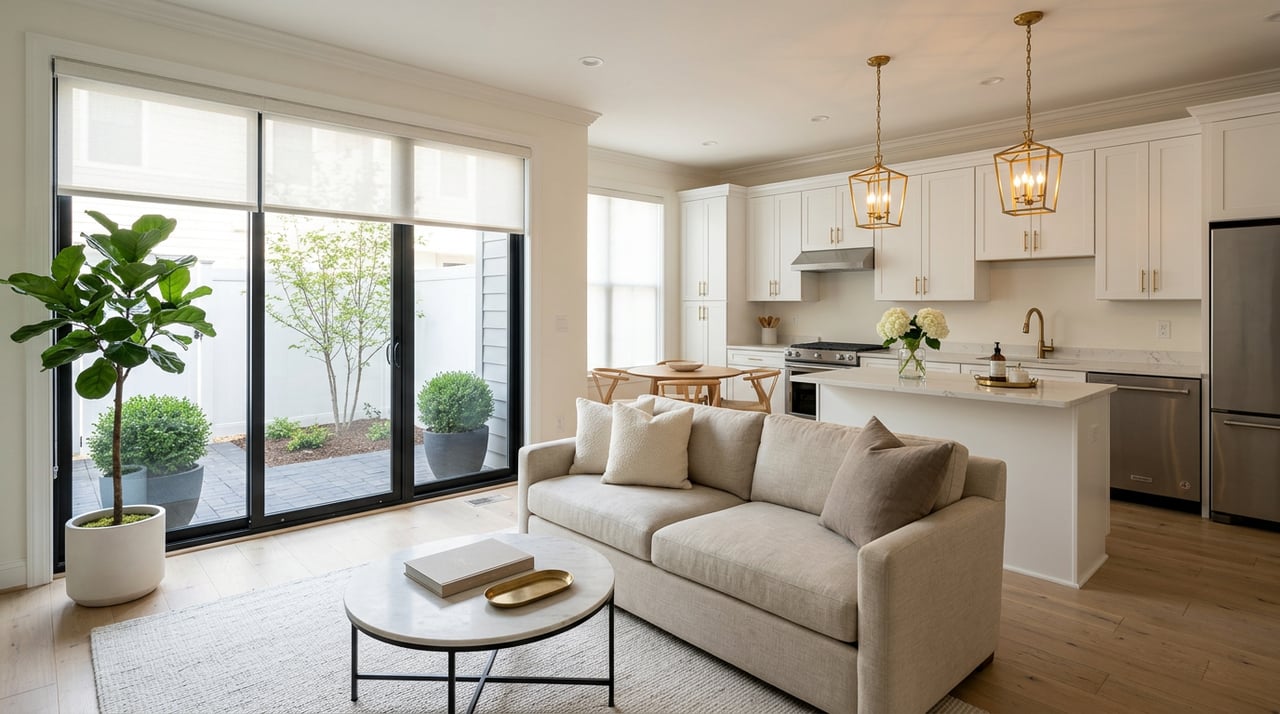
Buying your first home in Naperville can feel exciting and a little overwhelming. Prices vary a lot by neighborhood, townhomes and condos move fast, and every listing seems to have different fees or rules. You want a clear path that fits your budget and your life. In this guide, you will learn what counts as a “starter home” in Naperville right now, how condos, townhomes, and smaller single-family homes compare, what to expect for inspections and costs, and the financing and bilingual resources that can help you move forward with confidence. Let’s dive in.
What a starter home looks like in Naperville
Naperville is a mature suburb with strong demand and a wide range of homes. As of January 2026, recent market snapshots show a citywide median sale price near about $607,500, with broader value measures in the mid-$500Ks. That means most first-time buyers focus on condos, townhomes, or smaller detached homes to stay under the city median.
Prices vary by ZIP code and area. Downtown and select golf-club communities often sit above the median. Parts of 60563 and 60565 are commonly where buyers find more attainable options. Treat each pocket as its own mini-market and confirm live numbers with your agent on the day you shop.
Your likely entry price bands (early 2026)
- Condominiums: often low-$200Ks to mid-$300Ks for many resale units, depending on size, building, and updates.
- Townhomes: often mid-$300Ks to mid-$500Ks, based on location, age, and layout.
- Modest single-family homes: often upper-$400Ks to mid-$600Ks for smaller or older detached homes, with wide swings by ZIP and condition.
Starter home types explained
Condos: low maintenance, HOA-managed
Condos can be a smart first step because the association typically covers exterior maintenance, snow removal, common areas, and some insurance. You trade private outdoor space for easier upkeep and shared amenities. HOA rules and dues vary a lot, so include them in your monthly budget.
- Typical local pricing: many 1- and 2-bedroom resale units list below the city median. For example, a recent waterfront condo in Naperville with an HOA near $265 per month illustrated a common setup and price point in the low-to-mid $200Ks. See the listing details for that example in this Naperville waterfront condo. Always confirm current pricing and HOA dues at the time you buy.
- Trade-offs: more affordable entry price and less maintenance, but you will have HOA rules, shared spaces, and assessments to consider.
Townhomes: more space, still managed exteriors
Townhomes often feel like a middle ground. You get multiple floors, a private entrance, and sometimes a small yard or patio, with an HOA managing exterior maintenance and common elements.
- Typical local pricing: many Naperville townhomes list in the upper $300Ks to mid-$500Ks. Recent examples show units in the low-to-mid $400Ks. You can browse a dated example such as this Naperville townhome to get a sense of layout and finishes in that price band.
- Trade-offs: more living space than many condos and lower exterior upkeep than a single-family home, but still subject to HOA rules and dues.
Modest single-family homes: privacy and control
Smaller detached homes offer a private yard, full control over improvements, and no HOA in many cases. They also come with higher responsibility for maintenance and repairs.
- Typical local pricing: in early 2026, many first-time buyers target smaller 2–3 bedroom homes under roughly 1,800–2,000 sq ft, often in the upper-$400Ks to mid-$600Ks depending on ZIP, age, and condition.
- Trade-offs: most control and privacy, balanced by higher ongoing costs for the roof, siding, driveway, landscaping, and systems.
Monthly budget watch-outs
- Property taxes: Local effective rates are often above the national average. Plan for a meaningful share of your monthly payment to go to taxes. Verify the parcel’s current tax bill and any exemptions with your agent and township assessor.
- HOA dues: Condos and townhomes can carry monthly dues that change your affordability math. A typical 2-bedroom condo HOA might land in the low-to-mid $200s per month, but this varies by building and amenities.
- Insurance and utilities: Rates and utility costs vary by home type and age. Ask for average utility bills if available.
- Commute and parking: Budget for parking fees or train parking if that applies to your routine.
How to finance your first home
Most first-time buyers in Naperville use FHA or a 3 percent down conventional program, sometimes paired with Illinois down payment assistance.
FHA basics
FHA loans are popular because of flexible credit and a minimum 3.5 percent down payment with qualifying credit. The nationwide single-unit floor for 2026 is $541,287. County limits can be higher. Confirm the local limit for a specific address using HUD resources and talk with an FHA-approved lender about mortgage insurance and monthly cost. Learn more from HUD’s FHA overview.
3 percent down conventional options
Conventional programs like Fannie Mae’s HomeReady allow as little as 3 percent down for eligible buyers. Some products have income limits tied to area median income and may require homebuyer education. One advantage over FHA is that private mortgage insurance can be removed after you reach sufficient equity. Review current details on Fannie Mae’s HomeReady page.
VA loans
If you are a qualifying veteran or service member, a VA loan can allow zero down with specific eligibility rules. Check your eligibility with a VA-approved lender.
Illinois down payment assistance (IHDA)
The Illinois Housing Development Authority offers Access products that pair a fixed-rate mortgage with down payment assistance. Options include forgivable, deferred, or repayable assistance. Programs require homebuyer education, have income and purchase price caps, and often require a minimum borrower contribution. Program funding can open and close, so confirm availability with an IHDA-approved lender and review the latest details on IHDA’s program page.
Local counseling and lender support
- Homebuyer education and counseling: H.O.M.E. DuPage is a HUD-approved agency that offers group classes and one-on-one support, including Spanish language options. Education certificates from agencies like H.O.M.E. DuPage can help you qualify for assistance. Explore schedules and details at H.O.M.E. DuPage homebuyer education.
- Education in Spanish: Some mortgage programs accept online courses like Fannie Mae’s HomeView, available in Spanish, to meet education requirements. Start with Fannie Mae’s education resources.
Quick steps to get mortgage-ready
- Pull your free credit reports and address any errors.
- Compare quotes from one FHA-approved lender and one lender offering 3 percent down conventional options.
- Ask lenders to price rates with and without down payment assistance so you can compare monthly payments and cash to close.
- Complete your required homebuyer education early to avoid delays later.
- Confirm total monthly cost, including HOA dues, taxes, and homeowner’s insurance.
Inspections you should plan for in Naperville
A thorough inspection protects your budget and sets clear expectations for repairs.
Standard inspection and add-ons
Most buyers hire a licensed inspector for a roof-to-foundation review that takes about 2–4 hours and includes a written report. Expect a typical Chicago-area inspection fee in the $300–$600 range, depending on size and age. Common add-ons include radon testing, a sewer-scope camera check, termite or wood-destroying insect reports, HVAC servicing, and sometimes mold or lead testing. See what inspectors often flag in this ASHI overview of common issues.
Radon testing
Northern Illinois has moderate radon risk, and state health agencies recommend testing every home. If levels are above 4.0 pCi/L, mitigation is advised. Many standard mitigation jobs in the region run about $800–$1,200 or more depending on the house. Learn more from the Illinois Department of Public Health radon guidance.
Sewer lateral checks
In older suburbs, a damaged or blocked home sewer lateral can be an expensive surprise. Many buyers add a sewer-scope inspection to check for root intrusion or breaks. Read why a scope is often recommended in this sewer-scope explainer.
What inspectors often find locally
- Roof and gutter issues, grading or drainage problems that can lead to basement moisture.
- Aging HVAC systems, water heater concerns, or overdue servicing.
- Electrical safety items like missing GFCIs or grounding, and plumbing leaks.
- For condos and rowhomes, questions about roof or exterior condition and whether the association has adequate reserves or pending special assessments.
Practical tips: attend your inspection, ask questions, and request cost estimates for big items before you waive your contingency. Clarify which repairs you will ask the seller to complete and which you will budget for after closing.
En Español: recursos para compradores primerizos
Comprar tu primera casa en Naperville es posible con buena información y el equipo correcto. Muchos documentos del préstamo y del contrato están en inglés, por lo que contar con una agente y un prestamista bilingües te dará claridad en cada paso.
- Educación y asesoría: H.O.M.E. DuPage ofrece clases para compradores y consejería individual, con opciones en español. Revisa fechas y requisitos en H.O.M.E. DuPage.
- Cursos en línea en español: Programas como HomeReady pueden aceptar certificados de educación para compradores. Fannie Mae ofrece módulos gratuitos en español. Comienza con los recursos de educación de Fannie Mae.
- Asistencia de pago inicial: IHDA ofrece programas de ayuda que se combinan con préstamos FHA o convencionales, con requisitos de ingresos y educación. Revisa opciones actuales en IHDA.
Consejo: Completa tu curso de educación al inicio y reúne tus documentos financieros para acelerar la preaprobación.
Neighborhood and commute notes
Naperville’s pricing is not uniform. Downtown and certain amenity-rich communities often command a premium. Many first-time buyers look to 60563 and 60565 for more approachable price points. Factor in commute routes, Metra access, and local services as you compare neighborhoods across the city.
A simple first-time buyer timeline
- Strategy call and pre-approval. Define your budget, loan type, and monthly target payment.
- Home search and tours. Focus on one or two home types and compare by ZIP.
- Offer and negotiation. Use recent comparables and account for HOA dues and taxes in your max offer.
- Inspection period. Order general, radon, and sewer-scope inspections as needed.
- Appraisal and underwriting. Complete any loan conditions and finalize insurance.
- Final walk-through and closing. Bring your certified funds, ID, and any required education certificates.
Ready to take the next step? If you want a clear plan, bilingual guidance, and a calm, step-by-step process tailored to you, connect with Salma Torres. Together, we will compare the best starter-home options in Naperville and move you toward the keys with confidence.
FAQs
What is a realistic starting budget for first-time buyers in Naperville in 2026?
- Many first-timers target condos in the low-$200Ks to mid-$300Ks, townhomes in the mid-$300Ks to mid-$500Ks, and modest detached homes in the upper-$400Ks to mid-$600Ks, with wide variation by ZIP and condition.
How do condos and townhomes compare for low maintenance in Naperville?
- Condos usually offer the lowest exterior maintenance and often lower prices, while townhomes add space and a private entrance but still use an HOA for exterior upkeep.
How do HOA dues affect my loan qualification and monthly payment?
- Lenders count HOA dues in your debt-to-income ratio, so they directly impact how much you can borrow and your monthly affordability.
Do I need radon and sewer-scope inspections in Naperville?
- Radon testing is recommended statewide, and many buyers add a sewer-scope due to aging laterals in older areas; both tests can prevent costly surprises.
Can I combine IHDA down payment assistance with FHA or conventional loans?
- Yes, IHDA Access programs can pair with FHA or conventional loans if you meet income, purchase price, and education requirements and program funds are available.
How long does the home-buying process take for a first-time buyer?
- From accepted offer to closing, most timelines run about 30–45 days, depending on your loan type, appraisal timing, and how quickly conditions are cleared.